
Primary question: Do 532 documented cases and 20+ templates outperform your team's hand-written prompts for the same asset types?
RepoDaily adoption score
RepoDaily rates this as 89/100 (strong) for adoption: evidence, installation path, production risk, differentiation, license clarity, and AI/agent fit are scored from the article sources and adoption notes.
5 source(s) across 4 source category/categories, plus a RepoDaily-specific evidence module when available.
5 workflow step(s), 4 next-action step(s), and 1 command/install signal(s) were detected.
Trending momentum is +2,442 stars, with maintenance/release/issue signals counted when present.
Risk is marked medium, with 5 security note(s) and 3 explicit skip condition(s).
3 opportunity lens item(s), 4 alternative(s), and 4 type-specific section(s) support differentiation.
License source or license wording is present.
3 AI/agent-related signal(s) were detected in the article text and metadata.
Project overview
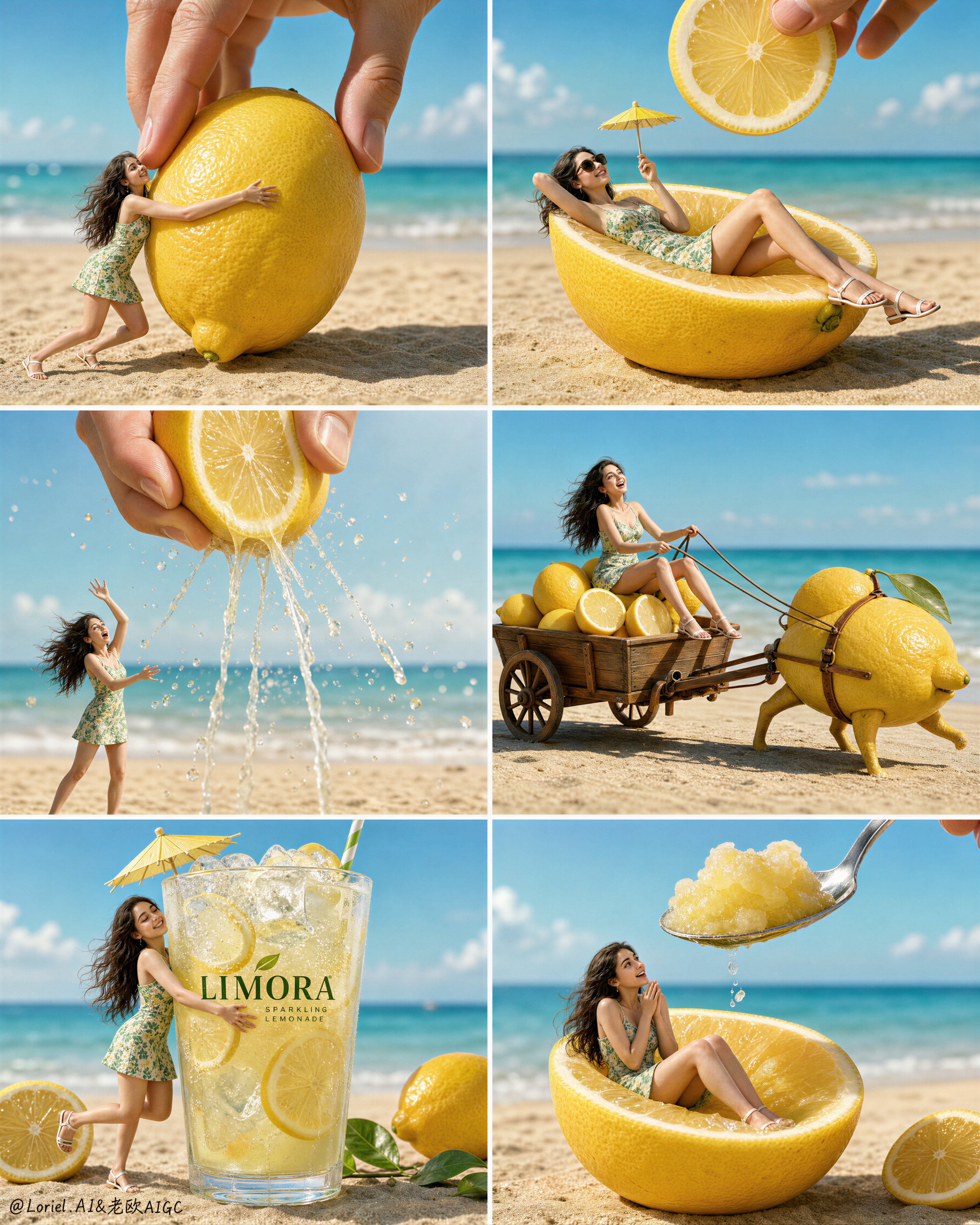
awesome-gpt-image-2 is a JavaScript repository that packages GPT-Image2 prompting as a maintainable artifact rather than a pile of screenshots. The README badge counts 532 cases — each one a rendered image paired with the full prompt that produced it, reverse-engineered and, per the '100% Original AI Rewritten' badge, rewritten rather than scraped. On top of the cases sit 20+ industrial templates that extract repeatable patterns, and the whole library is distilled into a Skill that ships as the npm package directory agents/skills/gpt-image-2-style-library.
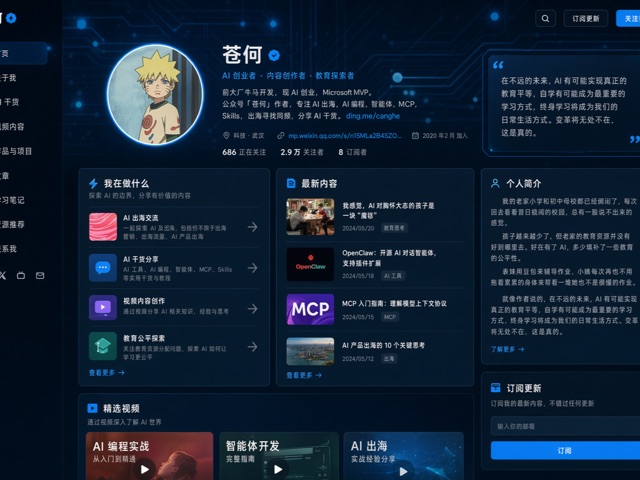
What separates it from a typical awesome-list is that it behaves like a product. package.json defines a Vite 7 + React 19 site (awesome-gpt-image-2-site, version 1.0.0) whose data is generated from the case files by node scripts/generate-site-data.mjs; the result is deployed at gpt-image2.canghe.ai, where readers open large previews, copy full prompts, filter by style or scenario, test generation after Google sign-in, and jump back to the source case on GitHub. The same pipeline regenerates the Skill artifact via node scripts/generate-style-skill.mjs, a separate script (scripts/install-style-skill.mjs) installs it locally, and npm pack plus npm publish --access public are wired up as ready-made npm scripts.
The momentum is measurable — rank 1 on the 2026-08-25 trending list with 2,442 stars gained in the period, plus a Trendshift badge — and so is the commercial layer: a one-time ¥9.90 Alipay payment unlocks the discussion group (the QR code only appears after the server confirms payment), GitHub Sponsors is active, and sponsor blurbs for APIMart and hiapi carry affiliate parameters. The code and documentation are MIT licensed (Copyright 2026 freestylefly), so the free content and the paid community remain cleanly separable.
Why it is trending now
- Ranked #1 on the 2026-08-25 trending list with 2,442 stars gained in the period (repository metadata).
- Scale with receipts: a Cases-532 badge, 20+ industrial templates, and a '100% Original AI Rewritten' claim, versus typical lists of unverified one-liners.
- 'Prompt as Code' is executable here: generate:style-skill and install:skill npm scripts turn the library into an installable agent Skill, not just a document.
- A live gallery at gpt-image2.canghe.ai lets readers filter by style or scenario, copy prompts, and test generation after Google sign-in before cloning anything.
- Trilingual READMEs — English, 简体中文, 日本語 — widen the reachable audience.
Problem it solves
- Image prompts are usually re-derived per asset; two designers prompt the same banner differently and nobody can tell which prompt won.
- Prompt knowledge lives in chat history and screenshots — unversioned, unsearchable, and gone when the thread is.
- Generic prompt lists omit production constraints — style, composition, text rendering, aspect ratio — that UI shots and infographics actually need.
- No shared 'house style' artifact exists to install into team tooling, so every model or member switch resets the learning.
How it works
- Cases: the README indexes 532 cases; each pairs a rendered image with the prompt that produced it, so the input is verifiable against the output.
- Templates: 20+ industrial templates abstract the recurring structure out of those cases for repeat scenarios such as UI shots, infographics, and covers.
- Skill distillation: node scripts/generate-style-skill.mjs builds agents/skills/gpt-image-2-style-library; npm run install:skill (scripts/install-style-skill.mjs) installs it, and npm run pack:skill / publish:skill:npm package and publish it publicly.
- Site generation: node scripts/generate-site-data.mjs converts the case files into data for the Vite + React 19 gallery; predev and prebuild run both generators automatically.
- Verify and loop: on gpt-image2.canghe.ai you copy a prompt, test generation after Google sign-in, and jump back to the matching GitHub case.
Product demo and interface preview
Command surface: the npm scripts that run this library
- npm run dev starts the Vite dev server; predev first runs node scripts/generate-site-data.mjs and node scripts/generate-style-skill.mjs to build case data and the style Skill (package.json).
- npm run install:skill runs node scripts/install-style-skill.mjs to install the gpt-image-2-style-library Skill locally.
- npm run pack:skill dry-runs npm pack ./agents/skills/gpt-image-2-style-library; npm run publish:skill:npm publishes it with --access public.
- npm test executes node --test api/_lib/*.test.js — it covers only the API helper library, not prompt quality.
- npm run build produces the production site with Vite; package.json lists version 1.0.0 and private: true.
Try-it path: from gallery browse to local Skill install
- No clone is needed to read the content: open gpt-image2.canghe.ai, browse large previews, copy full prompts, and filter by style or scenario (README).
- In-site generation testing requires Google sign-in; the discussion group is a paid community at ¥9.90 one-time via Alipay, with the QR code shown only after server-side confirmation.
- To run the site locally: clone the repo and run npm run dev — predev regenerates the site data first.
- To consume it as a Skill: run npm run install:skill, which invokes scripts/install-style-skill.mjs.
- To redistribute: run npm run pack:skill as a dry-run, inspect the tarball, then npm run publish:skill:npm.
Integration surface: what the Skill and the site plug into
- The Skill artifact lives at agents/skills/gpt-image-2-style-library and is structured for public npm publishing via the package.json scripts.
- Site stack: Vite ^7.2.7, React ^19.2.1, @supabase/supabase-js ^2.105.4 for backend data, google-auth-library ^10.6.2 for Google sign-in, alipay-sdk ^4.14.0 and stripe ^22.1.1 for payments, @google-analytics/data ^5.2.2 for GA4 reporting.
- node scripts/generate-site-data.mjs is the pipeline that turns the markdown case library into data for the browsable gallery.
- Additional integration scripts include scripts/alipay-webpay-sandbox-server.mjs (dev:alipay-sandbox) and scripts/google-analytics-oauth.mjs (ga4:oauth) for payment sandboxing and analytics authorization.
Maintenance risk: what could break this library
- Single-maintainer project (freestylefly, WeChat account 苍何); the README says 'continuously updated', but the source pack contains no release cadence, changelog, or roadmap.
- Prompt effectiveness is coupled to OpenAI's GPT-Image2 model behavior: a model update can silently degrade cases, and npm test only covers api/_lib/*.test.js, never prompt output.
- Monetization is embedded in the experience: a ¥9.90 paid community, GitHub Sponsors, and sponsor sign-up links carrying aff query parameters.
- The LICENSE is MIT (Copyright 2026 freestylefly), so code reuse is permissive; no contributor agreement or contribution process appears in the source pack.
Who should pay attention?
Good fit if
- Teams producing recurring GPT-Image2 visuals — marketing infographics, product UI shots, channel covers — who want reusable prompts instead of per-asset improvisation.
- Anyone who wants a versioned, copyable, MIT-licensed 'house style' prompt library they can fork.
- AI tool builders who want to consume the style library as an npm Skill inside their own agents.
Skip for now if
- Anyone needing offline or local image generation: this repo is a prompt library, not a model or runtime.
- Organizations whose security review cannot accept third-party sign-ins (Google on the hosted gallery) or paid community steps.
- Projects targeting image models other than GPT-Image2: the 532 cases are unvalidated elsewhere.
Risks and cautions
The content and code are MIT-licensed and free to read, but results depend on the external GPT-Image2 model, a single maintainer, and optional paid surfaces.
- Prompt quality is coupled to OpenAI's GPT-Image2 behavior; model changes can invalidate cases, and npm test covers only api/_lib/*.test.js with no automated prompt tests.
- Single maintainer; no changelog, releases, or roadmap appear in the source pack.
- Monetized surfaces (¥9.90 community, sponsors with affiliate links) sit alongside the free MIT content.
- Full verification needs a Google account on the hosted gallery plus access to GPT-Image2 generation to reproduce results.
- The repo ships server-side payment code: alipay-sdk ^4.14.0 and stripe ^22.1.1 are dependencies, and the README states the group QR appears only after the server confirms payment — payment validation is not client-side.
- Google sign-in is mediated by google-auth-library ^10.6.2; account data flows through Supabase via @supabase/supabase-js ^2.105.4.
- Analytics uses @google-analytics/data ^5.2.2 with a dedicated ga4:oauth script (node scripts/google-analytics-oauth.mjs) for authorization.
- Cases and prompts are static MIT content; reading the library sends no data anywhere — data leaves the browser only when testing generation on the hosted site after Google sign-in.
- Sponsor sign-up links in the README contain affiliate parameters (?aff=...); treat claims like '$0.006/image' as sponsor marketing copy, not audited pricing.
Alternatives to compare
| Approach | When to use | Trade-off |
|---|---|---|
f/awesome-chatgpt-prompts | You want a large community prompt list for text models rather than image-specific reverse engineering | Free |
openai/openai-cookbook | You need official, API-first examples and guidance straight from the model provider | Free |
ComfyUI | You want local, node-based image pipelines with full control instead of prompts for a hosted model | Free, self-hosted (your own GPU) |
GPT-Image-2 API platforms (APIMart, hiapi) | You already have prompts and only need generation capacity — sponsor blurbs quote from $0.006/image | Pay per image; links are affiliate-tagged |
What this trend reveals
Publish your house style as a private Skill
The repo already dry-runs npm pack ./agents/skills/gpt-image-2-style-library and publishes with --access public; a fork carrying your own cases becomes a versioned internal skill for agents.
Fork, replace the case files, run npm run pack:skill, inspect the tarball contents, then publish to a private registry.
Turn winning assets into new cases
The generate:style-skill pipeline rebuilds the Skill from case data, so adding cases for visuals your team already shipped keeps the library aligned with real output.
Add one case file, run node scripts/generate-style-skill.mjs, and diff the Skill output.
Self-host the gallery as a prompt browser
generate-site-data.mjs plus the Vite/React site means the gallery can run on an internal domain behind your SSO instead of the public gpt-image2.canghe.ai.
Clone, run npm install then npm run dev (predev regenerates data), and confirm cases render locally.
RepoDaily verdict
A prompt library that ships like software: 532 MIT-licensed reverse-engineered cases, 20+ templates, a regenerable npm Skill, and a working Vite/React gallery — take the content freely, but validate prompts against the live GPT-Image2 model before standardizing on them.